


You will probably hear it. But will you see it?
The wren is one of our tiniest and yet loudest resident songbirds, and finds a home in nooks and crannies all across Britain.
Its song is bright and consistent. It can go on blasting out that same sequence with incredible fidelity, hour after hour.
The strength and regularity of the song, with its penetrating trills, are the clearest giveaways.
It’s a good one to pick up through repeat exposure, because you can hear it all over the place - most urban parks, field edges and woodlands have their wrens, but windswept hillsides, coastal headlands, lakesides and marshes often have them too.
Another clue is that wrens seem to lack an ‘off’ button. They can be heard on bright winter days, and continuously from early spring, through summer and well into autumn.
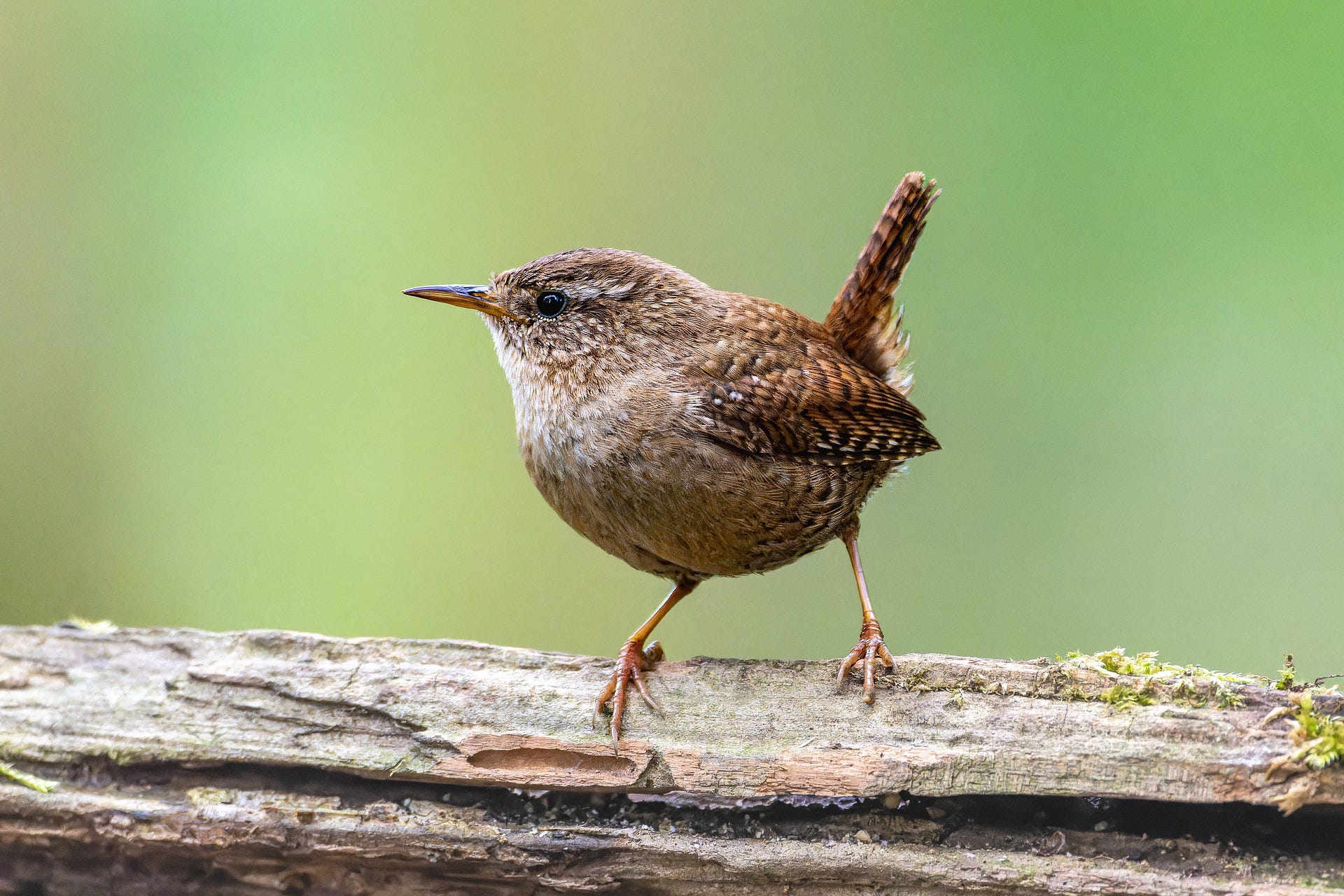
Wrens are ground-huggers, and tend to sing from a low perch. This may be perfectly viewable on a branch or fence post, but can easily be hidden out of sight.
And when not singing, they’re likely making alarm calls, often giving away their presence in nearby cover.
They have a couple of common ones. One is an abrupt stony tck! that can be strung together into an intolerant trill. The other is a slightly softer, but nevertheless insistent, scolding.
Among all bird calls, these from the wren are perhaps the most helpful clues to the presence of other animals in the landscape.
The trigger is often a cat or a person (perhaps you), but it could also be a fox, stoat or something else low to the ground that might otherwise pass you by.
Wrens are an invaluable guide to whatever else is happening.
Crevice dwelling
Their Latin name Troglodytes troglodytes (‘cave dweller’) refers to their knack of finding shelter in the stony crevices that most birds avoid, or perhaps just can’t fit into. This gives them purchase in places with less vegetation, such as cliffs and mountainsides, where other songbirds can be few and far between.
And while you rarely see more than one or two wrens together at one time, in harsh weather they may huddle together for warmth in the same roost. The most remarkable account concerns over 60 birds piling into a single nestbox in Norfolk one winter’s evening.
The Eurasian wren is found across Europe and also in the Far East of Asia. More than two-dozen sub-species have been described, including those distinctive to Scottish islands such as St Kilda and Fair Isle. For more on the wren’s ecology in the UK, see the BTO website.
🔊What might the wren sound like in ‘bird-time’?
Listen to the 64 distinct notes of the wren’s song slowed down and get a sense of its true complexity, courtesy of recordist Chris Watson, via the BBC World Service (2 minute listen).
Next time: Song Thrush
A stoical mid-January welcome to new subscribers. This is the third instalment in 2026’s cycle of Shriek of the Week. You can catch up with Blackbird, which includes more about how the whole thing works, and Robin.
There’s a Shriek of the Week every weekend, January to June.
For those in a position to do so, taking out a paid subscription supports me to write more and improve what I do. It also gets you full access to the A-Z archive, and an invite to the monthly Early Bird Club call, usually on the first Saturday of the month (8-9am UK time).
Thank you recent new supporters Watty ness and Mel W.
📺 Watch-through-your-fingers of the week
Here We Come A Wassailing
Wrens also occupy curious crevices in the folk traditions of Britain and Ireland, as referenced in this fascinating BBC Bristol film from 1976.
In a number of scenes it seems unlikely that no-one was incinerated, crushed to death or collapsed from liver cirrhosis in front of our very eyes
Thanks to Zabby at Nature Notice Board for posting about this - follow Zabby’s newsletter on Substack here.
Learn more birdsong in 2026
Sign up for the 10-week British Birdsong Essentials course - online group learning, step-by-step lessons, interactive calls, quizzes and Q&As - beginning February 2026
Join a birdsong morning in London or Brighton this spring - small group size, lessons before the day, and gentle walk - half price tickets available to those taking the Birdsong Essentials course
Access the full A-Z archive of Shriek of the Week (77 species and counting) and the Early Bird Club calls, with a paid subscription.
Credits:
Image by Siegfried Poepperl
Thanks to Mark Cocker & Richard Mabey for the account of roosting wrens in Birds Britannica.


